
3D printers
3D printing at Special Secondary School no. 2
If some time ago 3D printing seemed like science fiction, today this innovative technology is accessible to both professionals and amateurs. Thanks to the many advantages it offers, it is successfully used to transform a digital product into a physical object, making it possible to reduce production time and cost.
How does 3D printing work?
Regarded as a technological miracle, 3D printing involves the creation of physical objects by depositing consecutive layers of material, which retain their desired shape after hardening. To be able to print, it is necessary to use a 3D CAD-type modeling program.
You can also use a 3D scanner, which has the role of scanning the shape and surface of a three-dimensional object, to render it in digital format. Once you've got the model you want, it's imported through a program that turns it into instructions that can be executed by 3D printers.
Thanks to the multitude of technologies and materials used, 3D printing allows the creation of a variety of objects, such as interior design, glasses, dental products or even replicas of ancient artifacts.
3D printing at the Special Secondary School no. 2
3D printing is considered a necessity in schools, because it allows students to learn about new technologies, but also to understand complex theories. This can be used to build different models for art, biology, geography or history.
3D printing is also useful for kids who are passionate about design and technology. The multiple advantages it offers in education were demonstrated at the Special Secondary School no. 2, originally known as "Helper School no. 2". The Educational Institution was established in 1965 and provides educational and therapeutic-remedial assistance for students with moderate/mild/severe profound or associated mental impairments.
The school also provides educational and support services for students with special educational requirements, integrated in mainstream education, for students who cannot be moved, schooled at home or schooled on a hospital bed (within the Fundeni Clinical Institute and the Al. Trestioreanu Oncological Institute).
Within the school, specific educational-therapeutic intervention strategies are applied for students with ADHD syndrome, Down syndrome, autistic spectrum disorders and other types of deficiencies.
The climate of the school organization is open, stimulating, characterized by dynamism. The mission assumed by the entire staff of the Special Secondary School no. 2 is to develop contexts and learning situations, pursuing the involvement of students with special educational requirements under as many aspects as possible: cognitive, social, cultural, as well as that of partnership with the family and the community, aiming, at the same time, to ensure continuity and coherence of the educational approach.
It is also desired to create an optimal image of the school space, where human and material resources are used for the development of the student in accordance with his potential, and the provision of premises for social and professional integration in the school, social and professional environment.
"Activities with students with intellectual disabilities involve the use of many tangible support materials to facilitate learning. Also, the quality and success of these activities are determined by the quality and adaptation of these support materials to the needs and particularities of our students.Along with the teaching methods, the support materials lead to the development of the didactic intervention strategy, which is a decisive factor in the success and progress of our students." Mrs. Corina Ionescu, representative of the Special School, tells us.
This is the reason why, as a result of the activities carried out in the European projects accessed by the institution, the Special School No. 2 Bucharest, opted for the integration of 3D technology.
Practically, within the Erasmus+ strategic partnership project "GAme-based education or how to Make lEarnong eaSier - GAMES", the students got to know for the first time this new technology for them.
One of the institution's partners presented within the project the prototype of a video game with objects made using the 3D printer. Later, a second project followed, where the students had the opportunity to physically see several 3D printers and experience working with them.
"These experiences have convinced us of the usefulness of purchasing a 3D printer for our school, through which we can make the objects needed for educational activities, thus facilitating easier learning through the support offered by the materials made, but especially by involving the students in these activities of creating objects with the 3D printer." says Mrs. Corina Ionescu, representative of the Special School.
Not because there was necessarily a felt need at the level of teaching techniques, but especially because there was a clear intention to use all existing resources in providing a complete support to students, the interest in 3D printing was born.
What was pursued by purchasing a printer was the use of 3D technology by the teachers of the institution, for the creation of support objects for learning, for example: vegetables, fruits, animals, family members, etc. The goal was to have tangible objects as support in learning, including to be able to achieve image-object correspondence or recognition of some objects by shape, size or color.
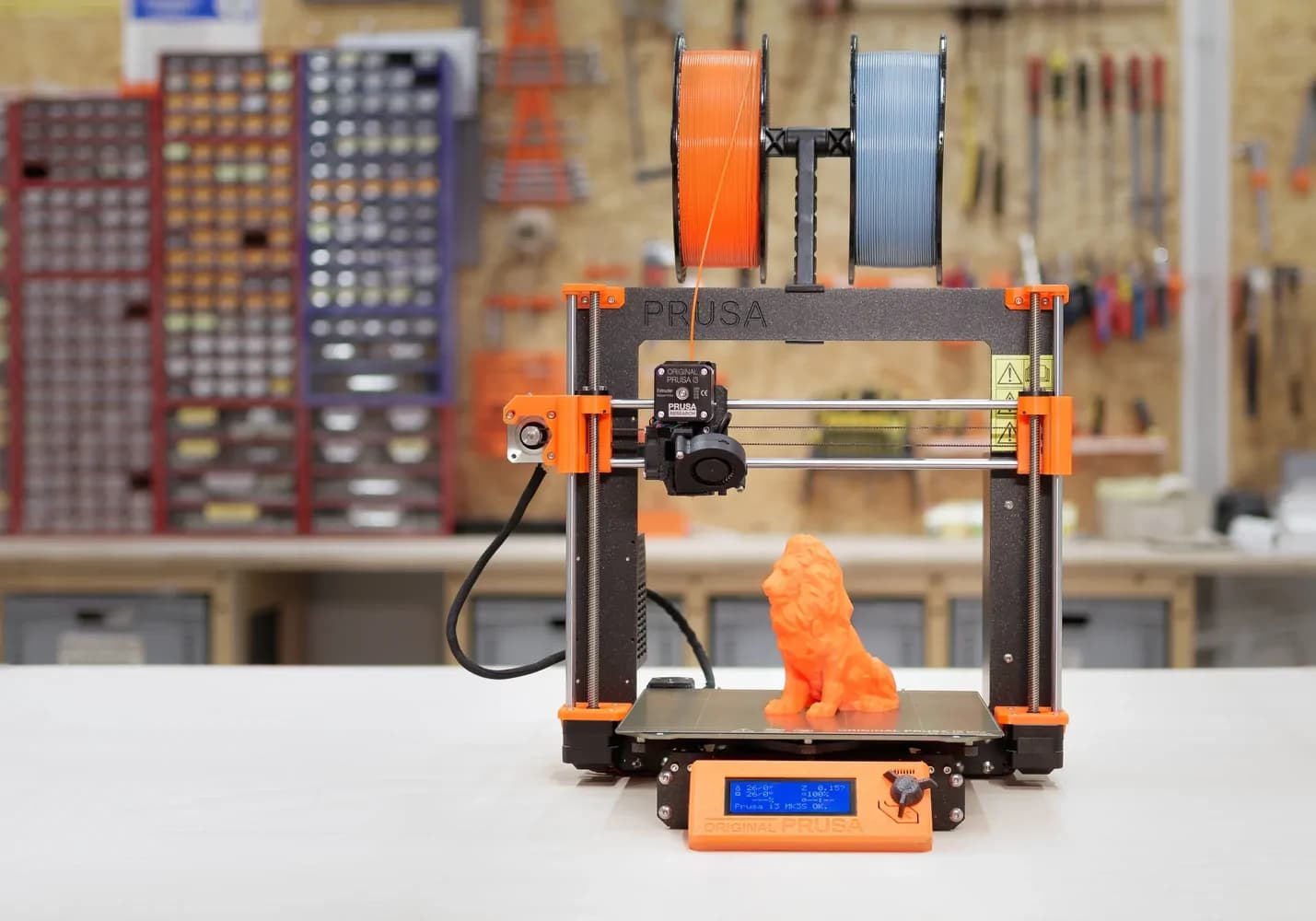
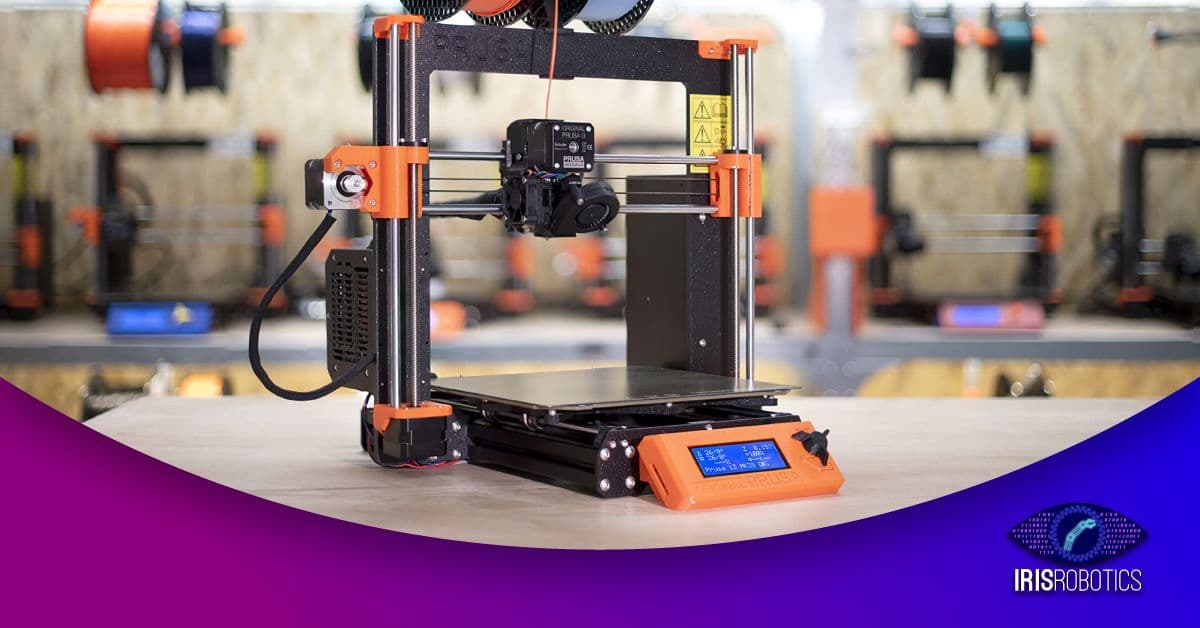
This is how we arrived at the Prusa MK3S+.
"I chose Prusa 3D printer, because, following a little research on the internet, it met our needs, having good reviews and being recommended for educational purposes. I also noticed that it is used in many countries. Looking for where we can purchase it, I discovered the IRIS Robotics website. The detailed description of the product on the website, the fact that it was offered to us ready-assembled, calibrated, the fact that we were offered consultation before purchasing, but also that we benefit from subsequent consultation and updates, convinced us that we would make the right choice."
Until the moment of the actual purchase, we notice that a series of steps have been taken, naturally, steps that from the moment we were asked for support, we went through them together in order to offer the most positive experience to our client.
The first contact of the teachers from the Special School No. 2 with a 3D printer
Even in these conditions, all customers who are in first contact with 3D printing, encounter the most common question when they are face to face with their new purchase: "And now, what to do?"
This is how the representatives of Special School No. 2 Bucharest handled the new challenge:
"Practically, after I connected it to the socket, I loaded the filament, I chose the model from the very intuitive menu and I started printing. I chose a smaller object, from the models stored on the SD card supplied with the printer, and the printing took around 2 hours. The resulting object was perfect, I could easily detach it from the magnetic printing surface and I couldn't wait to "play" with the printer. It's quiet and has been calibrated very well, I didn't have any problems using it for the first time as a beginner to 3D printing.'
3D printing can be considered friendly if you have made the right choice of printer according to the intended purpose. For the institution in question, a small printer designed for education was the right choice.Precisely due to the reduced dimensions of the printer and the fact that it arrives at the customer calibrated and assembled, ready to use, the Prusa MK3S+ represented the perfect solution for the school to build its much-needed supporting materials in the easiest possible way.
The experience of buying a 3D printer from IRIS Robotics seen through the eyes of the customer
Here is how our customer rates the experience of purchasing products through our company:
"The experience of purchasing the Prusa i3 MK3S+ 3D printer from IRIS Robotics was a particularly pleasant one. The professionalism of the team members, which they showed throughout the purchase process, is outstanding. The first telephone conversation helped us to choose exactly the printer we need, we were asked what we wanted to use it for, what we expected from a 3D printer, we were presented with several types of printers, we were presented with the advantages of each type and we were informed about the technical support that IRIS Robotics offers us throughout the use of the printer. So far there has been no need. We would like to thank the IRIS Robotics team for their openness and attention to the customer's needs."
It is true that the Prusa MK3S+ helps us with all its features, but we must admit that professionalism, seriousness and openness towards customers are also virtues that we possess and that recommend us in the relationship with those who choose us.
We believe that we make a good team with Prusa. All that remains is to convince yourself of this statement!
Other areas that can benefit from 3D printing
As you could see in this article, 3D printing is a useful tool for education, which educational institutions in Romania can benefit from, to facilitate the learning process. It is also needed in a variety of industries thanks to the low production costs and less manufacturing time it offers. Discover next 3 areas that can benefit from using a 3D printer:- Art and design
- Architecture
- Car industry
Manufacturers opt for 3D printing in the automotive industry due to the costs and reduced production time, but also the versatility it offers, so that parts can be made in countless ways. Of course, these are not the only industries that can be improved by using a 3D printer. Contact us to learn more!
How do we support you to identify the right 3D printer for you and your business?
Do you want a 3D printer but don't know which model to choose? It is natural that choosing the right printer can be difficult, especially in the context of the many models available on the market. That is precisely why we can help you with:- Printer recommendations tailored to your needs. As we did in the case of Special School No. 2, once we have identified the expectations you have from a 3D printer, we present you some suitable models for you, along with their advantages and tips for a suitable choice.
- FREE initial training, through which you can familiarize yourself with using the printer.
- FREE technical support after the purchase of the printer, throughout its use, to solve the difficulties encountered.
- Delivery of an assembled and calibrated printer that is ready for 3D printing.
- Personalized advice and recommendations for the projects you want to do.


