
Robots
The role of social bots before the pandemic, during it, and in the near future
The role of social robots in public services and healthcare, retail, culture and private medicine: before the pandemic, during it and after.
06 July 2021IRIS Robotics7 min read

Image gallery


Article from 2021. Prices and offers are no longer valid.
Social (humanoid) robots, once only a luxury accessory for companies and events with big budgets, are increasingly becoming an integral part of various commercial, cultural, educational, and public interest processes. In 2019, a classic case study for the commercial use of social robots would be that of the Centro Colombo in Lisbon. There, a Pepper bot stood out for its interactions with visitors, over 20,000 in just 10 days, 94% of which were through verbal communication. The most requested features: entertainment (dances, jokes, songs, games, selfies, interactive quizzes, etc.) and then answers to frequently asked questions (eg: information about available stores). Also, also thanks to the entertainment functions, social robots can offer a strong differentiating factor in the context of "Expo" type events where, regardless of the position of the stand, they can attract a significant number of visitors, many of whom would come specifically to see and interact with the robot. The arrival of the pandemic, however, together with the mass closure of shopping malls and the cancellation of most social events, no longer gave social robots the opportunity to be "at the center of attention" in a sea of curious people, as the organizations they belong to would have originally intended. And thus, we can say that organizations were "forced" to capitalize on the other, less known and used functions of social robots. Some recent examples are:1. Public and Health Sector
Where social bots make their presence felt in places like: Hořovice Hospital in the Czech Republic, in the fight against the Covid-19 virus Where a Pepper robot, originally assigned to the children's ward before the pandemic, was reconfigured for a role in the hospital reception, due to the acute shortage of medical staff. At the front desk, Pepper greets visitors, checks their temperature with a thermometer attachment, and provides instructions as needed. And so it takes over some of the repetitive tasks that would normally fall to the already overworked and high-stress medical staff. Other advantages are that it can work 12 hours continuously, day after day, without getting tired or sick, and it is easy to disinfect. Petra Horáková, a spokeswoman for the hospital, said: "Dr Pepper - also known as Pete - has become a huge favorite with both staff and patients." While Natalie Kíle, head of the reception area says: "Dr. Pepper has proven to be very helpful - people not only listen to him, but also fidget less when they have to wait or follow instructions." Over time, Pepper has been used in similar contexts in organizations such as the City Hall of the 15th District in Paris, or the offices of the Water, Electricity, and Public Transport authorities in Dubai. And in each of these contexts, the results seem to be unanimous: The interlocutors are more receptive to the instructions provided by the robots, more patient and generally more satisfied with the services received from the institutions. Also, officials say they can work much more efficiently, and in less stressful conditions, when they no longer have the responsibility of repetitively communicating general information.2. Retail Sector
Where a very interesting exploitation example is of Eobuwie.pl - a Polish online shoe store, which recently started to open physical stores as well, but without any kind of "on-the-shelf" merchandise. Customers can browse a digital catalog and the products are brought directly from the warehouse to them in less than 3 minutes to try on. Pepper's role is to approach potential customers and present them with the product catalog, along with personalized recommendations, through the interactive tablet it is equipped with. Watch the video on YouTube3. Cultural Sector
More specifically, in museums such as:- Smithsonian National Museum of African Art in Washington
- Museum of Sciences and Industries of Paris
- Municipal Library of Hanover, Germany.
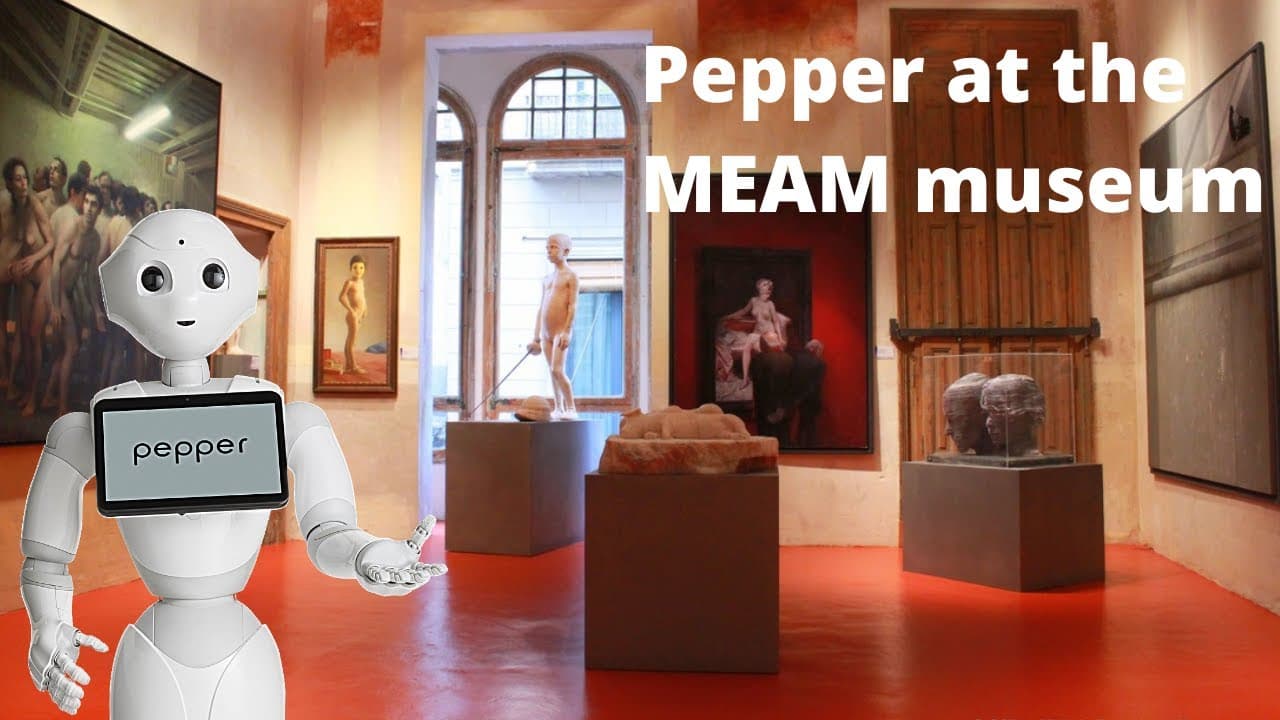
- The European Museum of Modern Art in Barcelona


