
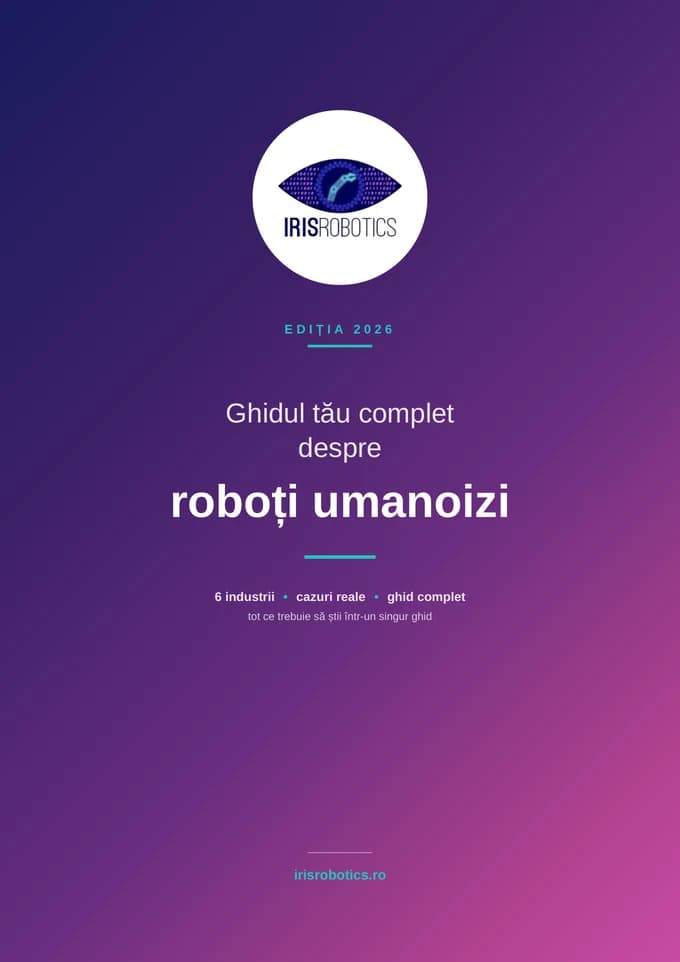
Your complete guide to humanoid robots
The 2026 edition, 20 pages: which robots you can deploy now, how integration works, case studies from Romania and the myths explained. The guide is in Romanian and arrives free by email.
- PDF, 20 pages
- In Romanian
- Free, by email
Our clients


What you will learn
Twelve short chapters, free of jargon, that answer the questions you ask yourself before bringing a robot into your company. The guide is in Romanian.
Where humanoid robotics stands in 2026
The three kinds of robot a company can use today: social, industrial and quadruped. You learn what each one is good for.
13 needs, each with an example
From more positive reviews to shorter queues and help in the classroom: see what integration looks like for each need.
The robots you can deploy now
The temi and Double telepresence robots, the Pepper social humanoid and the Unitree G1 and NAO bipedal robots, with specifications and recommended roles.
How a robot works in your company
Three concrete examples: at reception, as a guide at events and as an assistant that explains your services to customers.
Case studies from Romania and abroad
Unident, FITPTI Iași, the UAIC Museum, Design Week Sfântu Gheorghe, Clarfon and ŠKODA, plus deployments in manufacturing and logistics, from BMW to Tokyo's Haneda airport.
Integration, step by step
Choosing the robot, developing the application (2-3 months on average) and putting it to work. Plus the myths explained and how to tell whether you need a robot at all.
At the end you will find frequently asked questions, a glossary of terms and the IRIS Robotics services.
Who the guide is for
The guide starts from needs, not from technology. It is written for companies and institutions with many public interactions or many repetitive tasks.
Receptions, clinics and banks
- Greeting visitors and answering frequent questions
- Directing people to the right office or counter
- Less anxiety in the waiting room
Events, trade fairs and launches
- A robot that draws people to your booth
- Products presented by voice and on screen
- Photos that visitors share
Schools, universities and museums
- Programmable robots as classroom assistants
- The same accurate presentation, in several languages
- Guided tours with something new
For manufacturing and logistics, the guide also covers industrial humanoids and quadruped robots. It also tells you when you do not need a robot: in a small company with few customers and rare interactions, a robot may be just a gimmick.
Three of the case studies in the guide
The guide has six case studies from Romania and four international ones. You can also read these three in full on our blog.
Unident: a Pepper in every clinic
Pepper talks to patients in Romanian about the doctors, the services and dental hygiene, and helps them get over their fear of the dentist.
Read the case study Theatre festivalFITPTI Iași: Pepper as the 2021 mascot
At the edition themed on art and technology, Pepper welcomed the audience, told stories, danced and took selfies. The artistic director called it the sensation of the festival.
Read the case study Product launchŠKODA: host of the ENYAQ iV launch
At Băneasa Shopping City in Bucharest, Pepper welcomed visitors and invited them to a survey about the new model. 238 visitors interacted with the robot and gave feedback.
Read the case study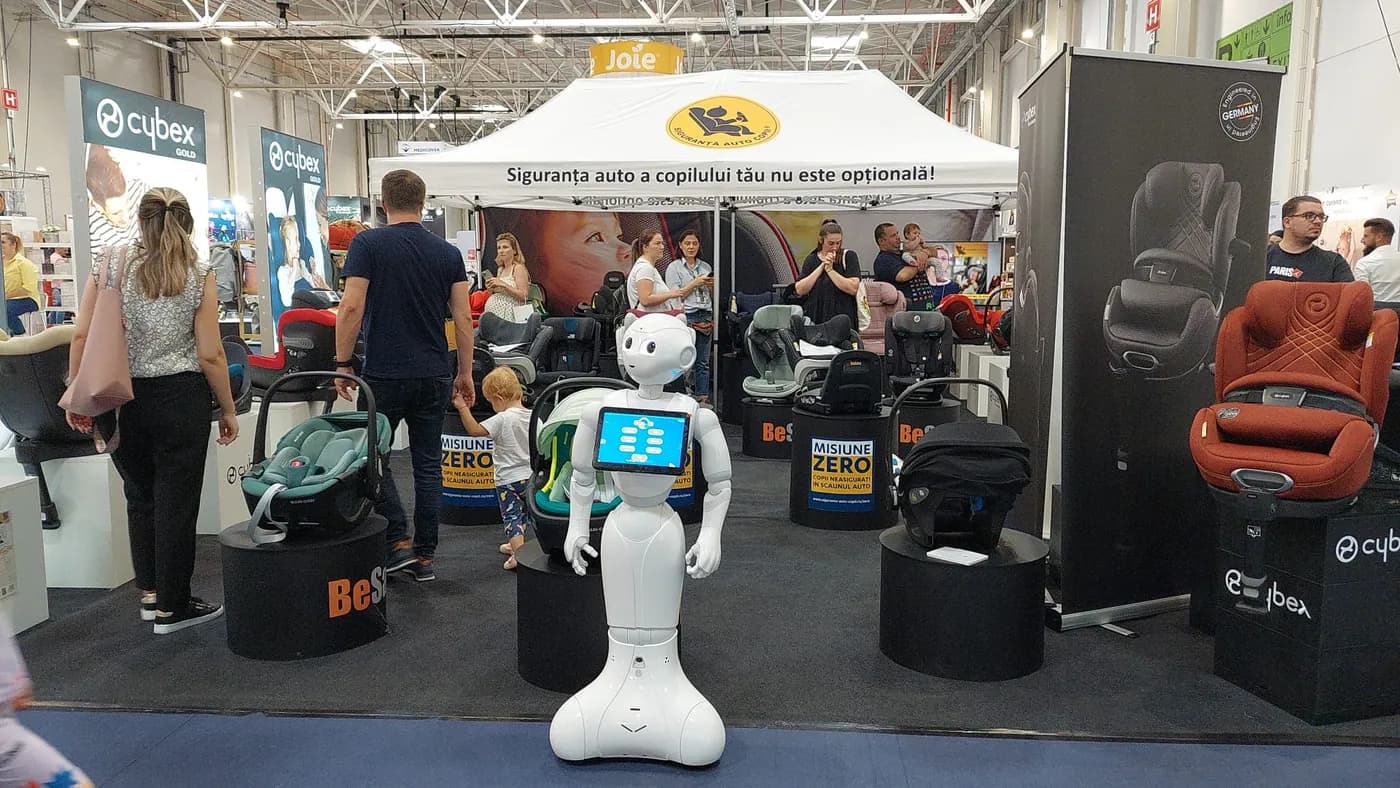
Want to see a robot at work?
We rent out Pepper+, R1 EDU, Go2, temi and NAO for events, with our operator and a scenario prepared by us.
Frequently asked questions
Cannot find the answer? Write to us or call us.
Is the guide free?
Yes. Enter your name and email address and the guide arrives free by email, as a PDF file.
How do I receive the guide?
By email, as an attached PDF, a few minutes after you send the form. If you cannot see it in your inbox, check your Spam folder too.
What language is the guide in?
The guide is in Romanian. It is the 2026 edition and has 20 pages.
Which robots does the guide cover?
The temi and Double telepresence robots, the Pepper social humanoid and the Unitree G1 and NAO bipedal robots, with specifications and recommended roles. It also explains the main categories: social, industrial and quadruped robots.
Does the guide include prices?
No. The price depends on the robot and on the application you need, so you get it in a quote. The guide helps you choose the robot and its role.
Is a robot worth it for a small company?
It depends on how many interactions you have. In a small company with few customers and rare interactions, a robot may be just a gimmick. If you have a steady flow of customers or many repetitive tasks, the guide helps you see where you save time.
How long until the robot is working in my company?
Developing the custom application takes 2-3 months on average, depending on the functions you choose. Delivering the robot and integrating it come on top of that.
What do I do after reading the guide?
Write to us or call us for a free consultation. We look at your company's workflow together and propose the robot, the application and an integration plan.
Get the guide by email
Enter your name and email address and we will send you the PDF, free. The guide is in Romanian.
What is inside · PDF, 20 pages
- Where humanoid robotics stands in 2026
- Humanoid robots suited to your industry
- The robots you can deploy now
- How a robot makes work in your company more efficient
- Case studies: real successes in Romania and around the world
- How integration works in practice
- Myths and reality about humanoid robots
- Gimmick or real need
- Services offered by IRIS Robotics
- Frequently asked questions
- Glossary of useful terms
- Conclusion and contact